In the Middle Ages, chronicles mention Lovran as a town of seafarers, fishermen and fruit traders. The people of Lovran traded mostly in their famous maruni from the orchards on the slopes of Mount Učka. Lovran maruni are considered one of the highest-quality varieties of chestnut in the world (comparable only to the Slovenian Goriški maruni and the Italian Gentile de Torino).
The forests, or more precisely the orchards, of this noble sweet chestnut, grown in the hamlets above Lovran - Dobreć, Liganj, Tuliševica, Kožuli and Lovranska Draga - came about by crossing local wild chestnuts with saplings that Lovran sailors brought back from one of the countries of the Far East, most likely Japan. The export of maruni peaked in the 19th century, when they were in greatest demand in Italy, Austria and Germany.
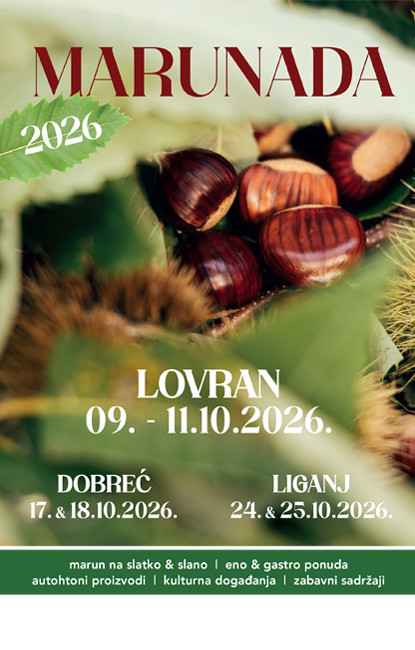
The people of Lovran are extremely proud of their chestnuts (maruni), and in October they dedicated a festival to them, called Marunada, which has been held for four decades in Lovran and the nearby villages of Liganj and Dobreć. At the Marunada you will find products made from chestnuts, traditional roasted chestnuts and dishes made with them. Cafés and pastry shops prepare cakes, sweets and tarts, while in taverns and restaurants you can taste authentic home-style dishes and dishes based on chestnuts. Alongside chestnut delicacies, visitors can enjoy homemade medica (honey liqueur), honey-based brandies and local young wine, and on weekends chestnut feasts are organised with entertainment and sports activities.
The British newspaper The Guardian named this festival one of the ten best autumn food festivals in Europe. The Lovran Marunada also appears alongside similar events from Switzerland, Italy, France, Germany, Austria and Spain on the Swiss web portal Kastanienland, which promotes sweet chestnuts, chestnut dishes and festivals dedicated to chestnuts.